From Autonomous Vehicles to Autonomous Infrastructure: Building Trust, Cities, and Systems Around Driverless Mobility

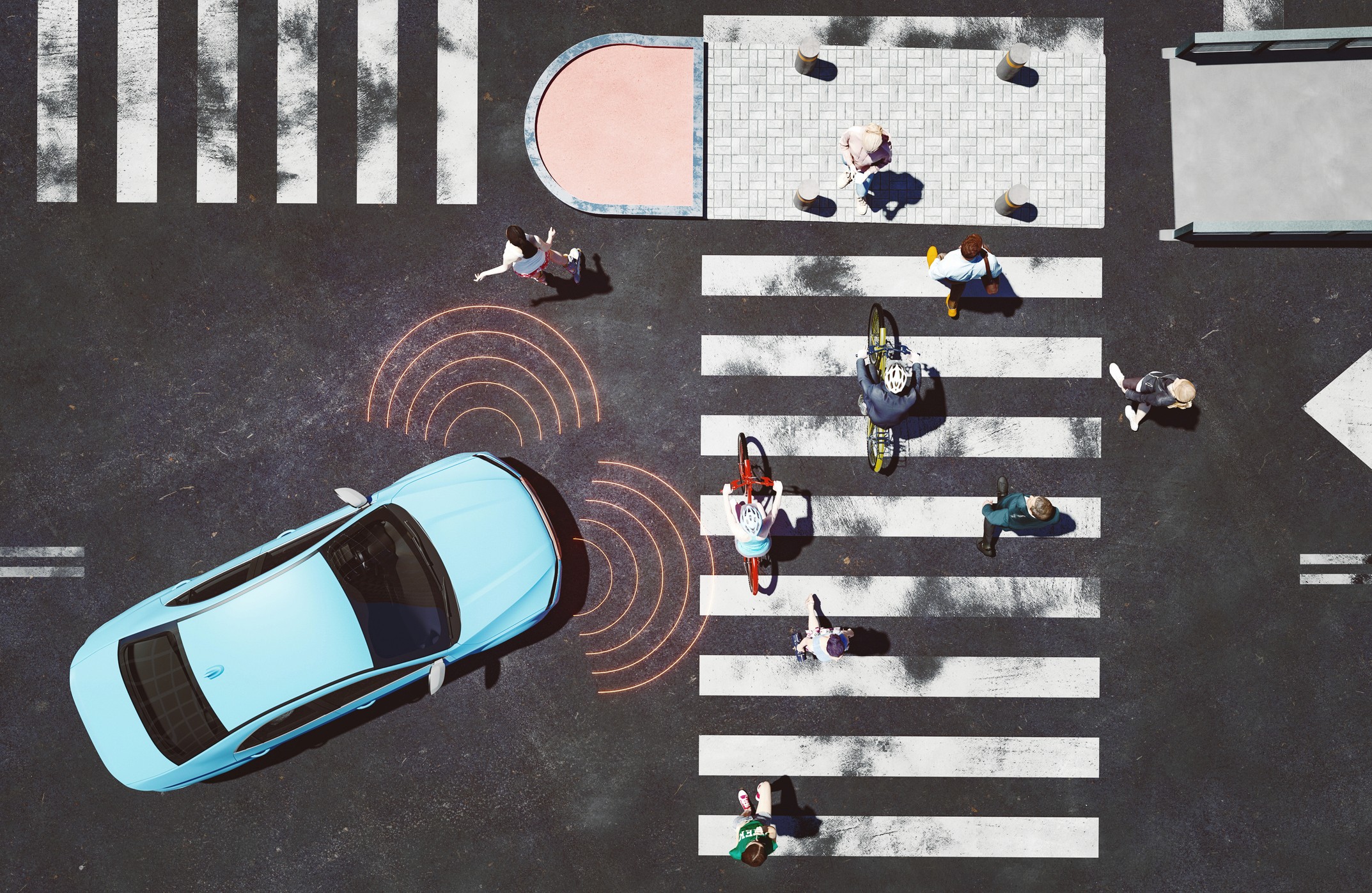
Photo Cred: gremlin - iStock
Autonomous vehicles are no longer futuristic curiosities, they are becoming infrastructure catalysts reshaping how cities move, work, and grow. Market forecasts now project the global autonomous vehicle industry to approach $1 trillion by 2033, driven by rapid advances in AI, sensors, and next-generation mobility systems (Autonomous Vehicles Market Forecast and Opportunities, 2025–2033).
At the same time, automakers like Volkswagen are moving autonomy out of labs and onto city streets, testing fully driverless, steering-wheel-free vehicles in real urban environments (Volkswagen Begins Testing of its Gen.Urban Autonomous Research Vehicle).
But the real opportunity is not just smarter vehicles. It is smarter systems, cities, and infrastructure that people trust. For autonomy to work at scale, it must be embedded into daily life in ways that feel intuitive, reliable, and human. Just as smart homes succeeded when technology faded into the background, autonomous mobility must follow the same path.
Why Autonomous Infrastructure Matters
Much of the conversation around autonomous vehicles still focuses on hardware, AI models, and performance metrics. Those elements matter, but they are only one piece of the puzzle. Vehicles do not operate in isolation. They rely on roads, data networks, regulations, urban design, and social acceptance.
The autonomous vehicle market forecast makes this clear. Growth is being fueled not only by consumer vehicles, but by logistics fleets, defense applications, public transportation, and smart city deployments (Vocal Media). These use cases require far more than autonomous cars, they require coordinated infrastructure that supports navigation, communication, safety, and accessibility at scale.
This mirrors what we have seen in proptech and smart home adoption. Technology alone rarely drives behavior change. Instead, adoption accelerates when systems are designed around how people actually live and move. We explored this dynamic in depth in Why the Future of PropTech Depends on Human-Centered Design, Not Just Smarter Technology, where trust, usability, and context consistently outperform raw innovation.
Autonomous infrastructure is facing the same test.
Trust as a Foundational Layer
If there is one constraint holding autonomous mobility back, it is not technical maturity, it is trust. Riders worry about safety and control. Cities worry about liability and integration. Regulators worry about accountability and data governance.
Volkswagen’s Gen.Urban project is a telling example of how the industry is responding. Instead of focusing solely on autonomy performance, Volkswagen is studying how people behave inside fully driverless vehicles, how comfortable they feel, how they interact with interfaces, and how trust develops over time (Tekedia).
The vehicle itself removes traditional controls entirely, no steering wheel, no pedals. What replaces them is experience design, personalization, and reassurance. This is not accidental. It reflects a growing recognition that autonomy will only scale if people feel safe, informed, and in control, even when they are not driving.
This same trust-first approach has already proven successful in residential technology. As we noted in Smart Homes Are Disappearing Into Daily Life, smart home systems succeed when they stop demanding attention and start quietly supporting routines. Autonomous mobility will need to achieve that same invisibility to become truly mainstream.
Cities as Living Laboratories
Autonomous infrastructure is being shaped in real time by cities willing to test, iterate, and adapt. Urban environments provide the complexity that closed courses cannot. Intersections, construction zones, pedestrians, cyclists, weather variability, and unpredictable human behavior all surface challenges that autonomous systems must handle gracefully.
Volkswagen’s Gen.Urban testing in Wolfsburg highlights this shift. Real streets, real passengers, real feedback. The goal is not just technical validation, but understanding how autonomous vehicles fit into everyday urban life (OpenTools.ai).
For infrastructure leaders, this reframes cities as active co-designers of autonomous systems. Roads become data corridors. Curb space becomes a mobility interface. Traffic systems become communication platforms. Autonomous infrastructure emerges not from a single innovation, but from coordination across physical, digital, and social systems.
Inclusive Mobility and Accessibility
One of the most promising outcomes of autonomous infrastructure is expanded access. Properly implemented, autonomous mobility can serve populations historically underserved by traditional transportation, including seniors, people with disabilities, and communities with limited transit options.
But inclusion is not automatic. It requires intentional policy, equitable infrastructure investment, and service design that accounts for diverse needs. Volkswagen’s research explicitly studies interactions across age groups and accessibility needs, reinforcing that inclusivity must be designed in from the start (Tekedia).
If autonomous infrastructure is deployed unevenly, it risks reinforcing existing mobility gaps. If deployed thoughtfully, it can become a powerful equalizer.
Regulation as Infrastructure
Regulation is not an obstacle to autonomy, it is part of the infrastructure that enables it. Legal frameworks define where autonomous systems can operate, who is responsible in edge cases, and how data is protected.
Different regions are experimenting with different models. Germany’s supervised Level 4 frameworks allow real-world testing while maintaining oversight. In the US, state-level pilots enable rapid iteration. Across Asia, national strategies are aligning infrastructure investment with autonomous deployment goals.
The takeaway is clear. Autonomous mobility scales fastest when regulation, infrastructure, and human trust evolve together.
Why Human-Centered Design Will Decide the Winners
Across every example, one theme repeats. Autonomy succeeds when it respects human behavior, not when it ignores it.
This is the same lesson learned across smart homes, proptech, and urban technology. Systems that adapt to people outperform systems that demand adaptation from users. When technology fades into the background, adoption accelerates.
Autonomous infrastructure that prioritizes clarity, comfort, accessibility, and trust will feel less like disruption and more like a natural extension of city life.
Looking Ahead
Autonomous vehicles are only the visible layer of a deeper transformation. Beneath them lies a growing network of infrastructure, policy, and human-centered systems shaping how cities function.
The future of mobility will be defined not by who builds the smartest vehicle, but by who builds the most trusted, inclusive, and integrated infrastructure around it.
Autonomous vehicles are not the destination. Autonomous infrastructure is.
Cities that succeed will be those that treat autonomy as a shared system, one built for people first, technology second. When trust, design, and infrastructure align, driverless mobility stops feeling futuristic and starts feeling inevitable.