From Digital Twins to AI Agents: How Cities Are Quietly Building Autonomous Infrastructure

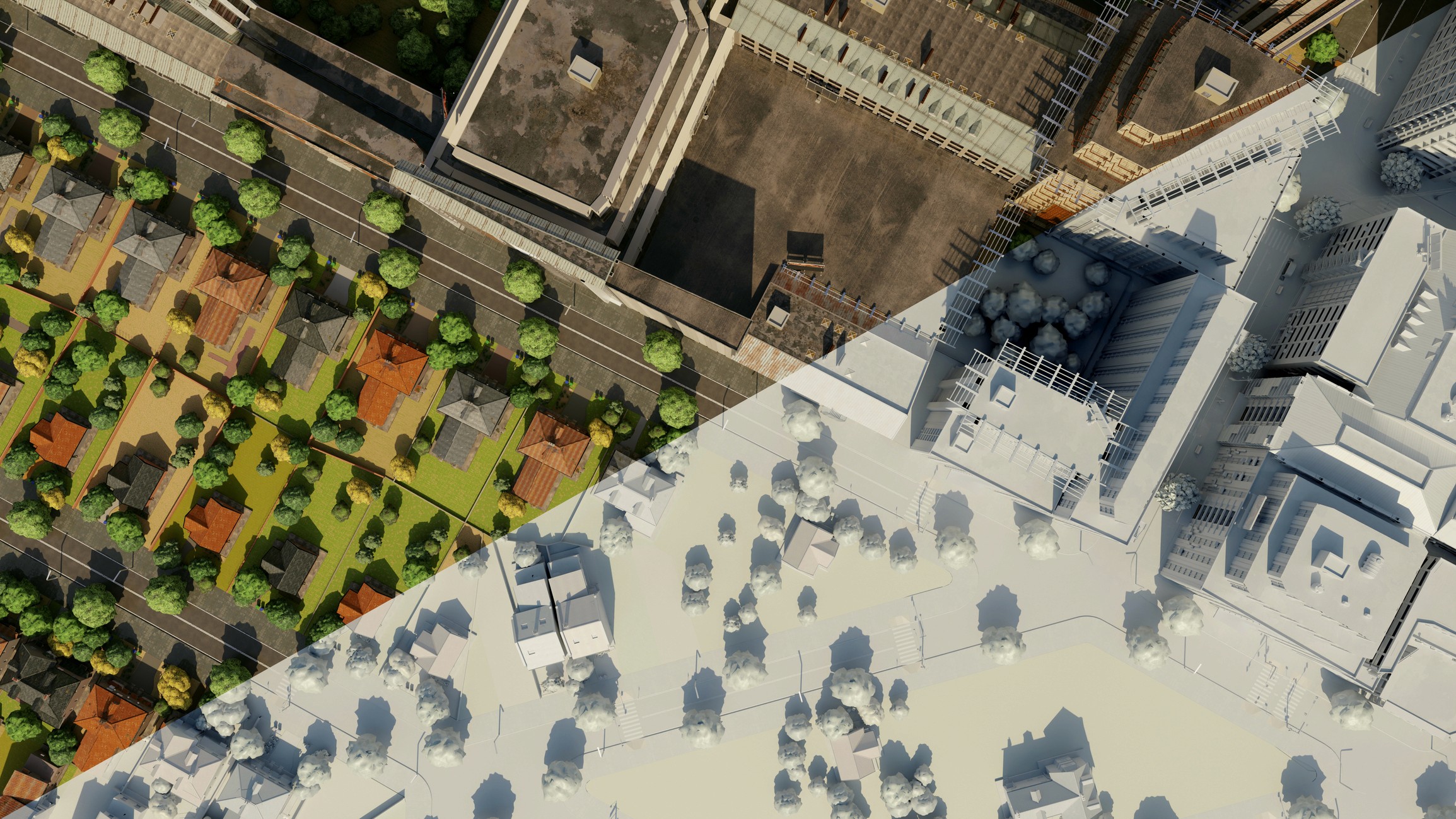
Photo Credit: mikkelwilliam - iStock
Smart cities have been evolving for years, but the next wave of innovation looks very different from what came before it. Infrastructure systems that once depended on manual monitoring and slow planning cycles are now being rebuilt around predictive data, AI agents, and governance frameworks that keep everything trustworthy. From climate-aware digital twins to AI-driven service platforms, cities are moving toward a model of autonomous infrastructure that quietly runs in the background while human teams focus on strategy and service.
This shift echoes many of the themes we have explored on our blog, including the rise of automation and AI governance in property operations, the transformation of climate resilient infrastructure, and the emergence of autonomous systems across coastal and maritime environments. Cities are now experiencing a similar turning point, shaped by technology that senses, forecasts, and acts in real time.
Today we look at how that transformation is happening, why it matters, and what it means for the future of urban living.
Digital Twins Are Becoming the Planning Engine for Smart Cities
Urban planning used to rely heavily on historical trends, fixed models, and assumptions about how people move and how neighborhoods grow. That is changing quickly as cities adopt digital twins. These living replicas blend climate data, geospatial layers, mobility patterns, environmental sensors, and policy scenarios into a single, interactive environment.
The examples keep coming:
Singapore’s Digital Urban Climate Twin, highlighted in Microsoft’s City Leader’s Dilemma report, uses climate models to simulate how different policies affect temperature and comfort at the neighborhood level.
Sydney’s predictive crash-risk modeling layers environmental data with historical incident patterns to anticipate dangerous road segments.
Imola, Italy, uses a microclimate digital twin to guide decisions around tree planting and cool pavement materials.
Digital twins like these align with the same infrastructure intelligence trends we explored in our blog on climate resilient, data driven infrastructure, where cities build long-term resilience by connecting environmental models with real time sensing.
Across regions, the pattern is clear. Cities no longer have to guess what might happen. They can simulate it, test it, validate it, and adjust before spending a single dollar on physical infrastructure.
AI Agents Are Becoming the New Urban Workforce
AI software development is moving quickly, and one of the most important shifts is the rise of AI agents. These systems operate more like digital coworkers than traditional chatbots, capable of running multi-step workflows, making decisions, and completing operational tasks with minimal oversight.
In cities, this shows up through unified service platforms:
Bangkok’s Traffy Fondue automatically categorizes and routes citizen reports to the correct department, handling nearly one million cases by mid-2025.
Buenos Aires’ Boti, a WhatsApp-based digital assistant, centralizes access to hundreds of city services.
These systems reveal what autonomous city operations may look like. Residents do not need to navigate multiple apps or understand how city departments are structured. AI becomes the interface, and departments across the city respond to issues with more accuracy and less administrative overhead.
This trend mirrors the rise of automation in multifamily operations, where AI governance and human centered workflows are reshaping leasing, maintenance, and compliance
AI agents are now doing similar work at the urban scale, quietly orchestrating the flow of information and coordinating across teams.
Autonomous Infrastructure Needs Guardrails, Not Guesswork
As AI becomes more embedded in essential infrastructure, governance is rising as a core requirement. Cities that are succeeding with AI deployments view governance not as an obstacle, but as the foundation for long term innovation.
Examples include:
Singapore’s Model AI Governance Framework, which sets guidelines for transparency, fairness, and accountability.
Barcelona’s Data Commons approach, which treats municipal data as a public asset and favors open-source procurement to avoid vendor lock-in.
This governance-first mindset is not limited to cities. In industrial sectors like mining and resources, cooperative AI regulation has already shown how shared testing environments, standardized protocols, and multi-stakeholder oversight can speed up innovation while maintaining safety.
Source: https://discoveryalert.com.au/cooperative-ai-regulation-industrial-competitiveness-2025/
Mining is often an early test case for autonomous systems, predictive maintenance, and AI enabled inspections. These same practices translate naturally into urban infrastructure management. Our recent blog on autonomous ISR and coastal resilience explores how AI driven sensing and autonomous systems can protect vulnerable infrastructure at the edge of land and sea.
Cities can learn from these early adopters. Good governance is not about slowing down innovation. It is about building conditions where innovation can scale without losing public trust.
Edge AI and Multimodal Data Are Powering Real Time Decisions
Infrastructure is increasingly running on edge computing, where AI models process data directly on devices, vehicles, drones, and sensors. This reduces latency, protects privacy, and enables real time decision making even when networks are under strain.
Multimodal AI also plays a key role here. When systems can interpret text, images, sensor data, climate models, and mobility patterns at once, their predictions become far more accurate.
This is exactly the kind of intelligence needed for:
Adaptive traffic control
Flood early warning systems
Structural health monitoring
Environmental compliance reporting
Real time energy load balancing
Drone based inspections
Cities no longer rely on siloed dashboards. They can merge everything into a single predictive engine, allowing infrastructure to respond to conditions as they happen, not after the fact.
The Next Era of Urban Infrastructure Is Quietly Autonomous
Cities are not suddenly flipping a switch and becoming autonomous. Instead, they are layering in systems that quietly take on routine tasks, unify data, and support complex decisions.
This is the same pattern we see in property operations, in climate resilient infrastructure, and in industrial environments. The difference now is scale. Urban systems need AI that is transparent, governed, and aligned with public values.
What emerges is a new operating model where:
Digital twins simulate futures instead of reacting to crises
AI agents handle citizen requests and internal workflows
Governance frameworks protect data and ensure fairness
Edge AI and multimodal models support real time action
Humans focus on design, oversight, and strategic decisions
It is not flashy and it is not futuristic. It is quiet, predictable, and reliable. That is the kind of infrastructure cities have been working toward for decades.
For organizations, policymakers, and innovators shaping the next generation of smart cities, events like MIE Expo’s Smart Home, PropTech, and Smart Infrastructure series provide the platform to connect these ideas to real world solutions.